
Your body's posture
Most of us have felt some kind of upper‑body discomfort — shoulders, wrists, neck, fingers, back. We often shrug it off… until it starts getting in the way.
Let’s call this: YBP — Your Body’s Posture (and sometimes, Your Body’s Protest). When something feels off, your body is signalling. And signals are useful.
We can group the common causes into five categories:
- Mindset
- Work environment
- Body patterns
- Lifestyle
- Life Events
Mindset
Is your mindset set to or open to:
-
I never feel pain.
-
It will go away.
-
I don't have time or money to fix my pain.
-
I don't like to exercise.
-
I don't feel motivated.
Sitting Work Environment
These desk settings will help your posture:
-
Check your chair type, arm rests and wheels should be able to roll easily, with appropriate back support).
-
Desks without drawers, so they don't block leg space.
-
Monitor at the right height.
-
Keyboard close to our arms.
-
Either a semi vertical or vertical mouse to alleviate the standard's unnatural wrist position.
-
Wrist support.
- See further below for recommendations.
Standing Work Environment
These work settings will help your posture:.
-
Bend your knees when picking things up: to avoid straining your back.
-
Adequate footwear: find the right fit so your foot frame is well supported.
- "Never walk empty handed" was my manager's motto when I was a waitress. Save trips when you can.
- Carry loads with both arms.
Body Patterns
Our bodies fall into awkward shapes, especially when we are focused or stressed.
-
Mummy pose: long hours sitting still.
-
Quasimodo pose: slouched position.
-
Stone pose: little or no physical activity.
- Sleep posture, are pillow and mattress supportive? And any pets claiming your legs, neck, head as their territory?
-
Nutrition: do you have the necessary amount of vitamins, minerals, proteins, etc?
-
Relying on quick fixes that mask the pain.
-
Not taking breaks from a static posture.
Lifestyle
With awareness, we could look at doing these instead.
-
Holding our phone at eye level, giving our necks a break.
-
Considering office furniture for your home.
-
Making space for proper DSE (Display Screen Equipment) setup.
- Carrying bags on both sides instead of using just one arm.
- Wearing correct footwear to avoid imbalance or altered walking patterns.
Life Events
Sometimes discomfort comes from what’s happening around us.
-
Genetic inheritance.
- Accidents.
-
Stressful periods.
-
Big changes affecting body or mind.
Your best posture
Small, consistent shifts will make a real difference.
-
Find a fun physical activity you can do regularly.
-
Build posture awareness.
-
Set up reminders to move or reset. BYP! (Break Your Posture!)
-
Notice your mindset.
Awareness is the first step. Once you see the pattern, your pain will either be gone, or kept at bay.
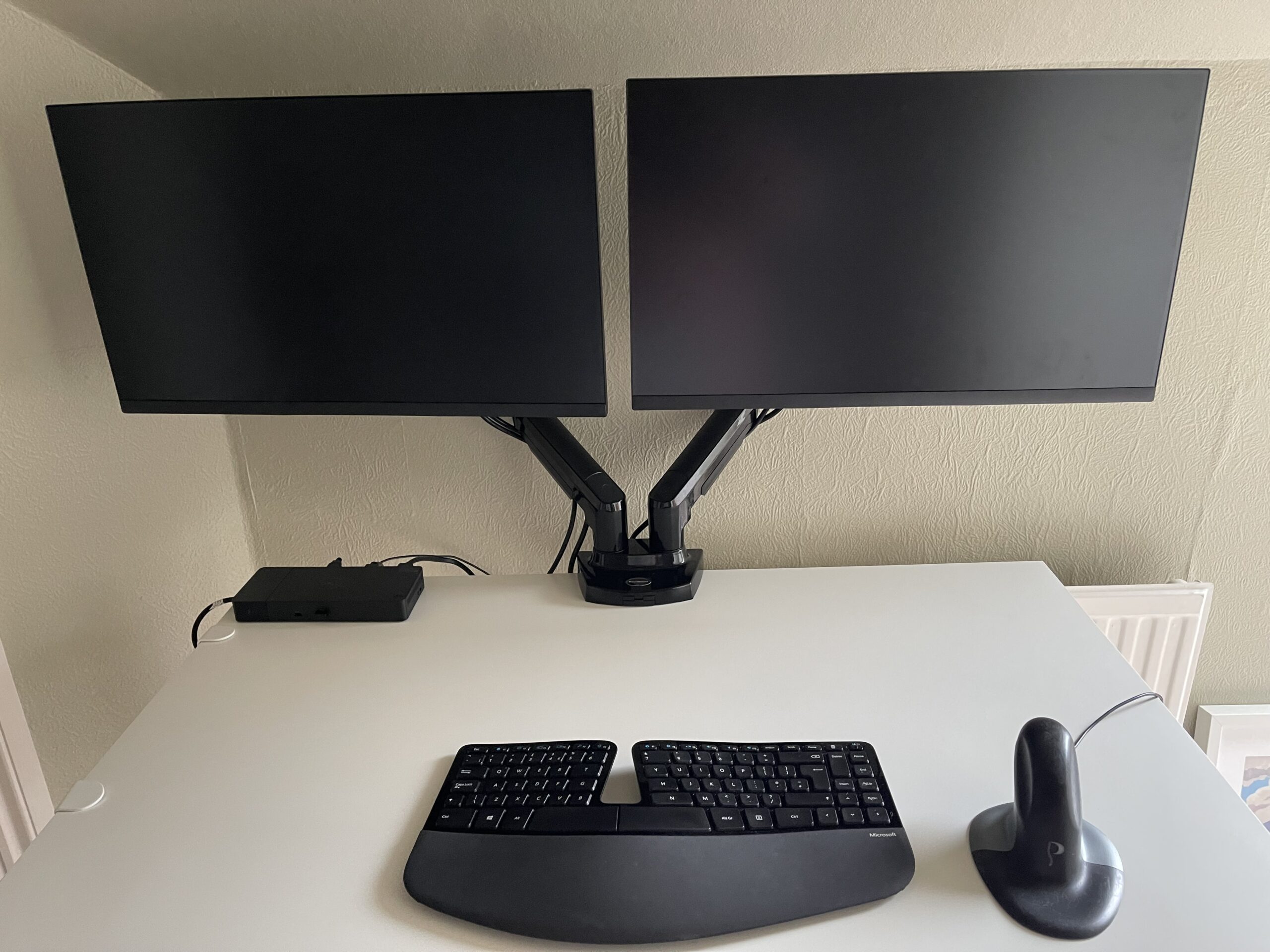
I used to think ergonomic DSE equipment was awkward — until repetitive strain injury (Tennis Elbow) hit me, and suddenly I embraced DSE fully.
Most employers have agreements with companies like Posturite, who offer a huge range of ergonomic equipment: mice, keyboards, chairs, wrist supports, and more. And thanks to places like Amazon, it’s now much easier for anyone to buy their own setup at a more affordable price.
Computer mice
Logitech's MX Vertical Ergonomic Wireless Mouse: Great for people who can’t use a standard mouse but don’t want to go with a fully vertical mouse. I use this one at home.
At work I use Posturite's Penguin vertical mice. I didn’t like it at first, but after a few years it’s become the most comfortable position for my arm — especially paired with individual wrist supports. When my right arm became too injured to cope, I even had to learn to use my left hand.
Desks
You don’t need anything fancy to start with. Even the simplest £25 Ikea desk (the one without drawers) works well because you can slide your chair underneath properly.
Computer chairs
I once tried a quirky office chair at a friend’s house and found it unbelievably comfortable. It turned out to be a Herman Miller Chair.
They’re expensive, but the back support is on another level — and they come with a 12‑year warranty. My £800 work chair wasn’t nearly as supportive as the £500 one I found on Back2's website. Tip: choose the version that can roll on carpet if you have carpeted floors.
Arm monitors
If you can get two monitors, do it. It takes a little time to adjust, but it makes a huge difference to posture and reduces neck strain. Amazon has plenty of affordable monitor arm options. See Amazon's options.